ISPM 15 Certified Export Wooden Packaging Solutions for Global Trade
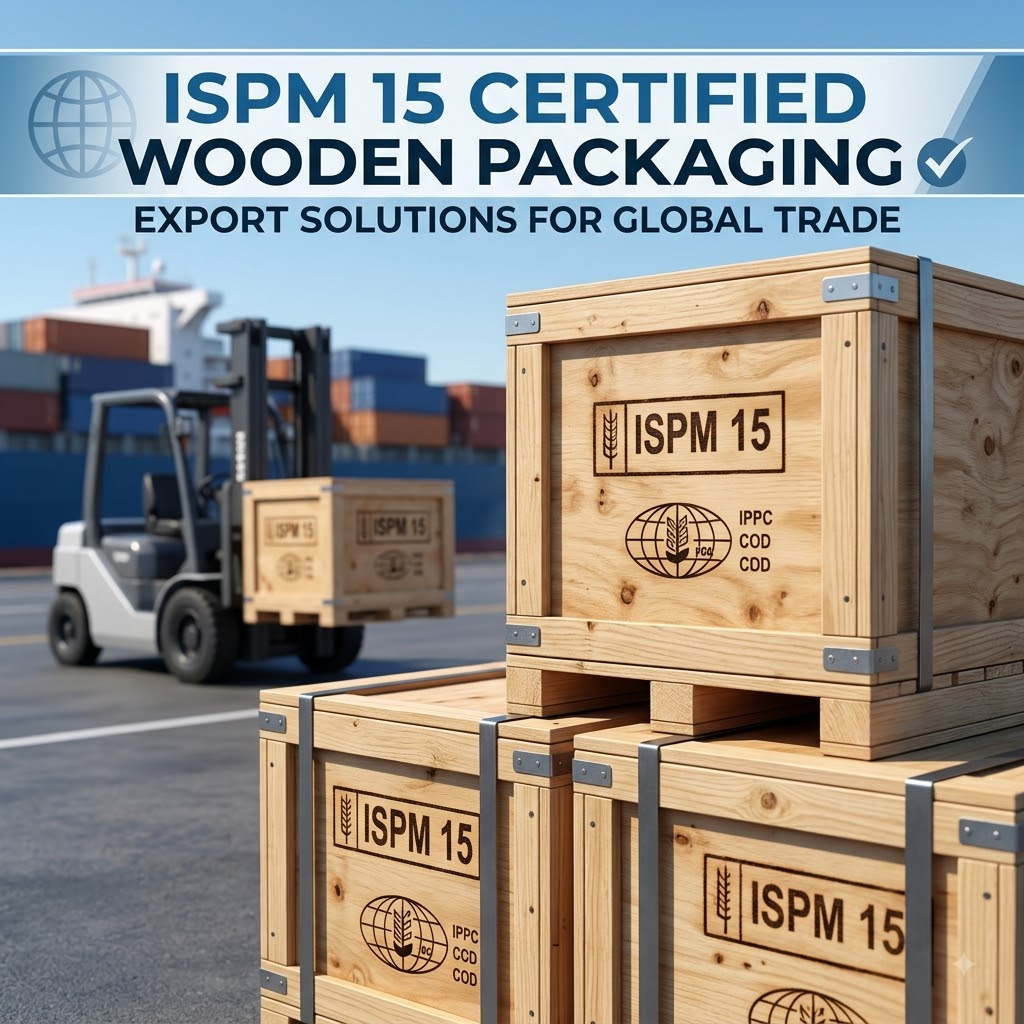
Table of Contents
1. Introduction
2. What Is ISPM 15 and Why Does It Matter?
3. What Wood Packaging Is Covered — and What Isn't
4. The Approved Treatments: HT, MB, and DH
5. The ISPM 15 Mark: Your Passport Through Customs
6. 2026 Regulatory Updates You Need to Know
7. Regional Enforcement: A Global Roadmap
8. The Real Cost of Non-Compliance
9. Choosing an ISPM 15 Certified Supplier
10. Real-World Impact: A Timber Packaging Compliance Case Study
11. Industry Applications at a Glance
12. Frequently Asked Questions
13. Conclusion
1. Introduction
Let me tell you about something I saw happen to a client a few years back. A full container of high-value machinery, headed for a major project in Southeast Asia. Everything was perfect — the paperwork, the product, the delivery schedule. Then an agriculture officer at the port flagged a raw-wood crate at the base of the load. No stamp. The whole consignment got denied entry. Re-exported at the shipper's cost. Demurrage charges piled up while they waited. A single unmarked pallet froze an entire shipment.
I've seen this play out more times than I care to count. And here's the thing — it's completely avoidable.
The global wood packaging market was valued at $12.82 billion in 2025 and is projected to reach $13.58 billion in 2026, growing at a CAGR of 5.9%. That's a lot of pallets, crates, and boxes moving across borders. And more than 180 countries now enforce ISPM 15 — the International Standard for Phytosanitary Measures No. 15.
But here's what I keep seeing. Exporters understand they need compliant packaging. They just don't always understand what that actually means in practice. And the gap between "knowing" and "doing" is where shipments get rejected, money gets lost, and relationships get damaged.
In this guide, I want to walk you through everything you need to know about ISPM 15 certified export wooden packaging. Not the theory. The practical stuff. What's covered, what's exempt. How treatment works. What the mark needs to look like. What's changing in 2026. How much non-compliance actually costs. And how to choose a supplier who won't let you down.
Whether you're a procurement manager, a logistics coordinator, or a business owner shipping products internationally, by the end of this you'll know exactly what it takes to keep your wooden packaging compliant — and your shipments moving.
2. What Is ISPM 15 and Why Does It Matter?
Let's start with the basics.
ISPM 15 is an International Standard for Phytosanitary Measures, issued by the International Plant Protection Convention (IPPC) under the Food and Agriculture Organization of the United Nations. It was first adopted in 2002 and has been revised since — notably in 2009 when debarking became a firm requirement.
The standard governs one specific thing: wood packaging material — known in the trade as WPM — used in international trade. That means pallets, crates, boxes, dunnage, bracing, and cable spools built from solid or raw wood.
Why does this matter? Because untreated wood can carry live pests deep inside it. The Asian longhorned beetle is the textbook case. It first turned up in New York in 1996, traced to wood packaging arriving from Asia. The USDA Forest Service has estimated that if it became established nationwide, it could kill up to 1.2 billion urban trees and cause losses reaching 669 billion US dollars. The emerald ash borer has already killed tens of millions of ash trees at a cost researchers put in the billions.
ISPM 15 sets a treatment that kills those hitchhikers, plus a mark that proves the treatment happened. More than 180 countries are contracting parties to the IPPC, and the big buyers of the world enforce the standard on inbound wood — the United States, the European Union, China, the GCC states, and Australia among them.
One point trips people up all the time. Wood packaging used purely inside one country, never crossing a border, sits outside the standard. The moment your pallet leaves the customs territory, it needs to comply.
3. What Wood Packaging Is Covered — and What Isn't
Here's where a lot of confusion happens.
ISPM 15 applies to all solid wood packaging material thicker than 6 mm. That includes:
Pallets and skids
Crates and boxes
Dunnage — wood used to secure cargo
Spools and reels
Wood used in bracing and blocking
Dunnage is one that catches people off guard. Even if it's just a loose board used as void-fill or blocking material inside a container, if it's solid wood thicker than 6 mm, it needs to be treated and marked. I've seen entire shipments held up because of a single untreated dunnage board that someone threw in at the last minute.
What ISPM 15 does NOT cover:
Processed wood — plywood, particle board, oriented strand board (OSB), veneer, MDF, HDF
Wood thinner than 6 mm
Paper-based packaging
Specialized gift boxes for cigars or wine
Heated wine and spirit barrels
Wood shavings, wood wool, and sawdust
Why are processed wood products exempt? Because the manufacturing process — glue, heat, pressure, or a combination — already eliminates pests.
For everything else made of solid wood that crosses an international border, ISPM 15 applies.
4. The Approved Treatments: HT, MB, and DH
What matters is not the type of wood but the treatment it received — and whether that treatment is stamped on it.
The IPPC recognises three approved methods.
Heat Treatment (HT) — This is the workhorse. The wood core must reach at least 56°C (133°F) and hold there for a minimum of 30 continuous minutes, right through the profile of the timber, not just at the surface. Conventional kiln drying that hits the same 56°C for 30 minutes qualifies as HT — which is why you'll often see "KD-HT" on stamps.
Heat treatment is accepted everywhere ISPM 15 applies, so it's the safest default for exporters shipping to mixed destinations. It leaves zero toxic residue and is environmentally friendly.
Methyl Bromide Fumigation (MB) — This was the other historic option. Wood is treated with methyl bromide in an enclosed area for at least 16 hours. But here's the thing — methyl bromide is being phased out due to its ozone-depleting properties. Several countries, including EU member states, Canada, and Australia, no longer accept MB-treated wood. The Montreal Protocol's continued phase-out means fumigation is becoming less viable and more expensive. In 2026, HT is the default for most exporters.
Dielectric Heating (DH) — This is a newer approved method using microwave or radio frequency energy. The wood must achieve a minimum core temperature of 60°C for one continuous minute throughout its entire profile.
In addition to treatment, the wood must be debarked. Even small amounts of bark on a treated crate can fail inspection — the bark could harbor surface pests even if the heartwood is clean.
5. The ISPM 15 Mark: Your Passport Through Customs
After treatment, WPM must be marked with a visible, permanent stamp to certify compliance. Without it, your packaging is non-compliant.
The mark must include:
The IPPC logo — an ear of wheat in a circle
The two-letter country code of where the treatment was performed
A unique facility number assigned by the National Plant Protection Organization
The treatment code — "HT," "MB," or "DH"
The mark must be applied to at least two opposite sides of each wood packaging unit. Stencils, brands, or laser markings are all acceptable as long as they remain visible for the life of the packaging.
One critical note for 2026. The two-letter country code must be separated from the facility identifier by a hyphen. This isn't new — but US Customs and Border Protection temporarily paused enforcement and resumed full enforcement on January 1, 2026. I've seen shipments rejected for missing hyphens. It sounds petty, but it's the rule.
Marks must not use red or orange — those colors are reserved for hazardous materials. Hand-drawn or altered markings are not accepted and may result in automatic rejection at customs.
6. 2026 Regulatory Updates You Need to Know
Let me highlight what's changed or tightened for 2026.
Hyphen requirement reinstated. As I mentioned, US CBP resumed full enforcement of the hyphen requirement on January 1, 2026. If your mark doesn't have that hyphen between the country code and facility number, it's non-compliant.
China now requires phytosanitary certificates in addition to ISPM-15 marks for certain wood types.
Australia has increased inspection rates to 40% of incoming shipments.
The EU conducts random sampling and has zero tolerance for live pests.
South Africa prohibited the "DB" code in ISPM-15 stamps for WPM as of January 1, 2025.
ISPM-15 remains the absolute standard for enforcement in 2026. While the last major update to the standard occurred in 2013, and the IPPC periodically reviews all phytosanitary measures, there is no indication of upcoming changes to ISPM-15 for 2026. But as global trade and ecological risks evolve, staying informed by the IPPC and industry partners is essential.
7. Regional Enforcement: A Global Roadmap
While ISPM 15 is a harmonized standard, enforcement varies by region.
Region | Key Enforcement Characteristics |
North America (NAPPO) | Full enforcement. The U.S., Canada, and Mexico reject WPM showing live pests even if it carries the IPPC mark |
European Union | Strict enforcement. Bark-free requirement is checked carefully. Zero tolerance for live pests |
China | Rigorous inspection, especially on machinery and project cargo. Frequent physical inspections. Non-compliant WPM is often destroyed or re-exported at the shipper's expense |
Australia & New Zealand | Some of the strictest border biosecurity regimes. Often require a "Packing Declaration" and may mandate secondary inspections |
Brazil | Active enforcement |
More than 85% of countries now mandate ISPM 15 compliance. Navigating these regional nuances is critical to avoiding port-of-entry delays.
8. The Real Cost of Non-Compliance
Here's where things get expensive.
A non-compliant crate can result in the shipment being returned, fumigated at the discharge port at the importer's expense, or destroyed. An ISPM 15 rejection at the discharge port can cost a five-figure remediation bill and weeks of delay.
Let me break down the numbers.
A single rejected container due to pallet non-compliance can cost a shipper $5,000 to $15,000 in re-inspection fees, re-export costs, and delayed delivery penalties. In some cases, penalties have reportedly exceeded $1 million.
Beyond the direct costs:
Re-treatment charge: $300 to $1,500
Demurrage: $50 to $150 per day
Customs penalties in the U.S.: $250 to $10,000 per shipment, depending on severity
Fines in Australia/New Zealand: start at $10,000
Contractual penalties: late delivery penalties as stipulated in client contracts — for a $500,000 cargo, that could be $5,000 or more
One rejected shipment can wipe out the profit of an entire quarter. And that's before you consider the reputational damage.
9. Choosing an ISPM 15 Certified Supplier
Selecting the right supplier is crucial — especially for businesses shipping high-value products or operating on tight delivery schedules.
Here's what I recommend looking for:
Verify their certification. A reputable ISPM 15 certified supplier will be transparent about their credentials. Check that their ISPM 15 certification is valid and issued by an authorized agency.
Check the marks. Before partnering with a supplier, inspect their pallets, crates, and other wood packaging. Do they display the correct ISPM-15 stamp — including the IPPC logo, country code, facility code, and treatment method?
Ask about their treatment process. Are they using HT or MB? Do they have documented procedures? Do they maintain treatment certificates?
Understand their quality control. How do they ensure bark-free wood? How do they verify that every piece of packaging is marked correctly?
Consider their experience with your destination markets. Different regions have different enforcement nuances. A supplier who understands the specific requirements of your target markets is invaluable.
10. Real-World Impact: A Timber Packaging Compliance Case Study
Let me share a documented case that illustrates the effectiveness of ISPM 15 — and what happens when it's not followed.
Researchers analyzed pest interception records of wood packaging material inspected at US ports before and after ISPM 15 implementation. The data came from the US Department of Agriculture's Pest ID database, covering the period from 2003 to 2009.
The findings were striking. WPM infestation rates declined 36-52% following ISPM 15 implementation. This wasn't a small sample — it was based on systematic records of pest interceptions at US ports of entry.
The study documented the taxonomic diversity of infested wood genera intercepted at US ports, and the findings reinforced the need for enhanced compliance with ISPM 15 to reduce entry of non-native wood-boring insects.
What this tells me is simple. The standard works — when it's followed. The pests that were getting through before ISPM 15 are now being stopped. But the study also noted that pest interceptions still occur, often due to treatment not being applied properly, infestation following treatment, or outright fraud.
This is why choosing a certified supplier matters. This is why inspecting your packaging before shipping matters. The system works — but only if everyone in the supply chain does their part.
11. Industry Applications at a Glance
Industry | Typical Packaging | Key Compliance Considerations |
Machinery & Equipment | Heavy-duty crates, pallets | High-value cargo; rejection risk is severe; often requires custom crating |
Automotive | Pallets, crates for parts | High volume; just-in-time delivery means delays are costly |
Aerospace | Custom crates, specialized packaging | Extreme value; strict documentation requirements |
Electronics | Pallets, crates | Often uses plywood (exempt) but pallets may be solid wood |
Food & Beverage | Pallets, crates | Some destinations have additional phytosanitary requirements |
Pharmaceuticals | Pallets, climate-controlled crates | Regulatory overlap; compliance is non-negotiable |
12. Frequently Asked Questions
Q: What's the difference between heat treatment and kiln drying for ISPM 15?
Kiln drying that achieves a minimum core temperature of 56°C for at least 30 minutes qualifies as heat treatment under ISPM 15. You'll often see "KD-HT" on stamps. But not all kiln drying meets the standard — the specific time-temperature requirement must be met.
Q: Do I need ISPM 15 for plywood crates?
No. Plywood, particle board, OSB, and other processed wood products are exempt because the manufacturing process — glue, heat, and pressure — eliminates pests.
Q: How long is an ISPM 15 treatment valid?
Heat treatment is considered permanent for the life of the packaging. As long as the wood remains intact and the mark is visible, it remains compliant. Methyl bromide fumigation has a shorter effective period and is increasingly restricted.
Q: What happens if my shipment arrives with non-compliant wood packaging?
Options range from re-treatment at the port (at your expense) to rejection and re-export (at your expense) to destruction of the packaging. In some cases, the entire shipment may be denied entry. Costs can range from hundreds to hundreds of thousands of dollars.
Q: Does ISPM 15 apply to wooden packaging used within the same country?
No. ISPM 15 only applies to wood packaging that crosses international borders.
Q: How do I know if my supplier is ISPM 15 certified?
Ask for their certification documentation. Check that their products display the correct ISPM-15 mark — IPPC logo, country code, facility number, and treatment code. You can also check with your National Plant Protection Organization for lists of approved treatment providers.
Q: What's the most common reason for ISPM 15 rejection?
In my experience, it's missing or illegible marks. Either the packaging wasn't marked at all, or the mark has faded, been painted over, or was never applied in the first place. The hyphen issue is also catching people out in 2026.
13. Conclusion
Look, I'll be direct about this. ISPM 15 certified export wooden packaging isn't optional. It's a binary requirement for entry into more than 180 countries. You either have it, or your shipment doesn't move.
The good news is that compliance isn't complicated. It's specific. Heat treatment to 56°C for 30 minutes. Debarked wood. A clear, permanent mark with the IPPC logo, country code, facility number, and treatment code — with a hyphen between the country code and facility number. Applied to at least two opposing sides.
The wood packaging market is growing — from $12.82 billion in 2025 to a projected $17.39 billion in 2030. As global trade expands, the volume of wood packaging crossing borders will only increase. And with that comes more scrutiny, more enforcement, and more consequences for non-compliance.
The companies that get this right treat ISPM 15 compliance as a core part of their export process, not an afterthought. They work with certified suppliers. They inspect their packaging before shipping. They stay current on regulatory changes.
The companies that don't? They're the ones I see at the port, watching their container get rejected, wondering how a single unmarked pallet just cost them $15,000 and two weeks of delays.
Don't be that company.
Get your packaging right. Keep your shipments moving. And remember — that little stamp on the side of your crate isn't bureaucracy. It's your passport through customs.
Ready to Transform Your Packaging?
联系我们获取定制报价,我们的专业团队将为您设计最佳的包装解决方案