Heavy Equipment Export Packaging Quality Control Guide
Table of Contents
· Why quality control matters
· 1. Control design inputs and drawings
· 2. Inspect materials, joints and restraints
· 3. Verify moisture and surface protection
· 4. Check handling, loading and markings
· 5. Release the package with records
· Illustrative inspection scenario
Quality control for export packaging is a chain, not a final visual glance. A crate can look solid yet fail because the base does not match the load, blocking is loose, a lifting point is unclear or moisture protection is incomplete. A practical inspection plan follows the package from equipment data to design, material preparation, assembly, loading and release.
Why quality control matters
Quality control is a chain, not a final visual glance. A crate can look solid yet fail because the base does not match the load, blocking is loose, a lifting point is unclear or moisture protection is incomplete. Records reduce damage, repacking and port delays.
The public OBAO product information identifies wood packaging and equipment packaging. Exact inspection standards and service scope should be agreed for each order.
1. Control design inputs and drawings
Begin with approved cargo data: dimensions, gross weight, center of gravity, support points, lifting method, fork access, removable parts and fragile surfaces. Any change to the machine or route should trigger review.
The drawing should identify base members, blocking, braces, panels, fasteners, lifting points, fork pockets, labels and access panels. Use a revision number and approval date, replacing estimates with verified information before release.
2. Inspect materials, joints and restraints
Check timber, plywood, straps, fasteners, pads and barrier materials against the approved specification. Look for damage, contamination, moisture problems or substitutions. If solid wood is used internationally, verify treatment and marking requirements.
Inspect the base for sound joints, adequate bearing and even contact. Blocking should touch intended surfaces without crushing them; braces and straps should resist expected movement. Panels and lids should fit, with no protrusions that can damage equipment or handlers.
3. Verify moisture and surface protection
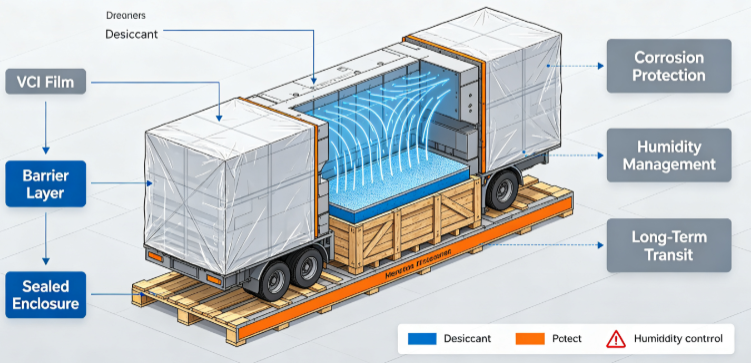
Confirm the machine is clean and dry before enclosure. Inspect corrosion protection, films, caps, plugs and cushioning. A barrier should be continuous, sealed and compatible with the finish.
Check desiccant placement and any inspection method specified. Do not invent quantities or service life; these depend on volume, materials, route and storage. Record what was installed and when.
Review condensation risk for the actual route. If the package may be opened and resealed, provide practical instructions.
4. Check handling, loading and markings
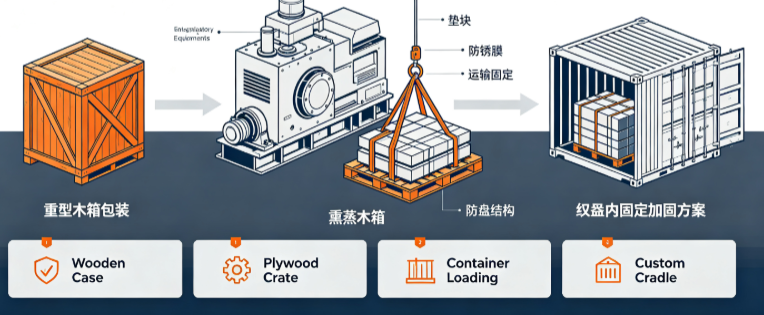
Verify fork pockets, sling points, lifting marks, center of gravity, gross weight and orientation arrows. Compare final dimensions with the loading plan and check floor support, lashing locations, access and unloading sequence.
Labels should remain visible after wrapping and handling. Include package identification, destination, gross weight, handling symbols and unpacking warnings appropriate to the shipment.
5. Release the package with records
A release file can include the approved drawing, material or treatment evidence, inspection checklist, photographs, packing list, loading sketch, restraint confirmation and handling instructions.
Define who approves deviations. A cosmetic mark may be acceptable, while a loose block, damaged barrier or changed lifting point may require rework. For repeat shipments, review claims and unpacking feedback and update the checklist.
Illustrative inspection scenario
A machine crate is ready for dispatch. The inspector checks the revised drawing, verifies dimensions, examines blocking, confirms the barrier seal and records lifting marks and gross weight. A loose brace is corrected before loading and photographs are attached. This is illustrative, not a reported OBAO result.
Additional release checks
Reconcile the physical package with the documents before dispatch. Confirm package identification, equipment reference, gross weight and destination. If the shipment has multiple crates, record which components belong together and the recommended unpacking sequence.
Review the receiver’s work environment as part of release. A package that protects the machine but cannot be opened safely creates a second risk. Check panel sequence, fastener access, lifting instructions and whether the receiver has the tools needed to remove braces or barrier film.
Ask the logistics team to review the handoff between packing and transport. The package may be inspected at a warehouse, transferred between vehicles or opened for customs. Define who may open it, how the barrier is restored and which photographs or seals must be recorded after an inspection. This small procedure helps preserve the protection designed at origin.
For recurring shipments, compare actual unpacking feedback with the original assumptions. Note damaged corners, missing marks, difficult fasteners, unexpected condensation or excess packaging labor. A short post-shipment review can improve the next drawing and reduce total landed cost without weakening protection.
Frequently Asked Questions
What should a checklist include?
Include approved cargo data, dimensions, materials, joints, blocking, bracing, moisture protection, marks, labels, loading restraints, photographs and release approval.
Can visual inspection prove strength?
No. Visual checks find defects, but structural risk needs an approved design basis and verified materials or calculations when appropriate.
How do I document a shipment?
Keep drawing revision, packing list, treatment evidence when applicable, inspection record, loading sketch, photographs and handling instructions together.
What if equipment changes after design?
Stop and review. Changes in weight, dimensions, support points, center of gravity or route may require a revised design and approval.
Conclusion
Quality control makes export packaging repeatable. Verify design inputs, inspect materials and restraints, manage moisture protection, confirm handling marks and release the package with records. Ask OBAO to confirm the project-specific inspection plan and service boundaries before production.
Related Articles / 相关文章
Ready to Transform Your Packaging?
联系我们获取定制报价,我们的专业团队将为您设计最佳的包装解决方案