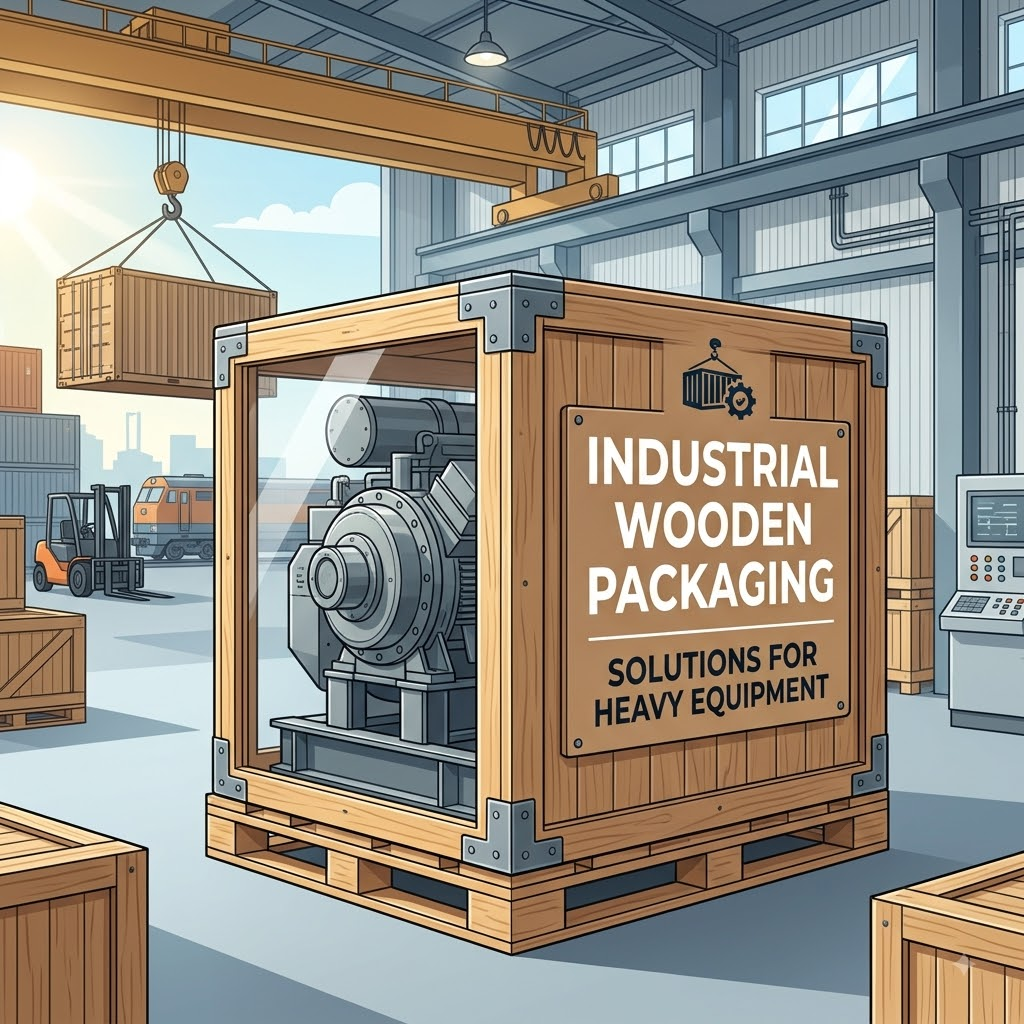
Industrial Wooden Packaging Solutions for Heavy Equipment Shipping
Introduction
Shipping heavy industrial equipment across countries is not simply a matter of placing a machine inside a container and securing it with basic materials.
Large machinery, production lines, energy equipment, construction components, and precision industrial systems often represent millions of dollars in investment. During transportation, they may face vibration, impact, humidity changes, improper handling, and long-distance environmental exposure.
This is where Industrial Wooden Packaging becomes a critical part of the supply chain.
Unlike standard commercial packaging, industrial wooden packaging is engineered specifically for demanding transportation conditions. It combines structural design, material selection, load calculation, and export compliance requirements to protect heavy and valuable equipment from the factory floor to the final destination.
For manufacturers, exporters, and logistics professionals, choosing the right packaging solution is not only about preventing damage. It directly affects shipping efficiency, customs clearance, installation schedules, and overall project costs.
Modern industrial wooden packaging solutions are widely used for:
· Heavy machinery transportation
· Industrial equipment export
· Manufacturing line relocation
· Energy equipment shipping
· Automotive components
· Precision engineering products
A professionally designed wooden crate or shipping case does more than surround a product. It becomes a customized protection system designed around the equipment’s weight, dimensions, center of gravity, handling method, and transportation route.
According to international packaging guidelines, wooden packaging materials used for global trade must meet phytosanitary requirements, especially the International Standard for Phytosanitary Measures No. 15 (ISPM 15), which regulates the treatment and marking of solid wood packaging materials used in international shipments.
For companies shipping heavy equipment internationally, working with an experienced industrial wooden packaging manufacturer helps ensure that packaging performance matches both engineering requirements and international shipping regulations.
Table of Contents
1. What Is Industrial Wooden Packaging?
2. Why Industrial Wooden Packaging Is Essential for Heavy Equipment Shipping
3. Types of Industrial Wooden Packaging Solutions
4. Material Selection for Heavy-Duty Wooden Packaging
5. Engineering Considerations for Machinery Packaging Design
6. Manufacturing Process of Custom Industrial Wooden Packaging
7. Applications Across Different Industries
8. Real Industry Case Study: Custom Crating for Industrial Equipment Export
9. How to Choose the Right Industrial Wooden Packaging Manufacturer
10. Frequently Asked Questions
11. Final Thoughts
What Is Industrial Wooden Packaging?
Industrial Wooden Packaging refers to specially designed wooden structures used to protect, support, and transport heavy or oversized products during domestic and international logistics operations.
Unlike ordinary wooden boxes used for consumer goods, industrial packaging focuses on structural performance.
The purpose is not simply to cover the product. The packaging must:
· Support the equipment weight
· Prevent movement during transportation
· Absorb shocks and vibrations
· Protect against moisture and environmental exposure
· Allow safe lifting and handling
· Meet export regulations
Typical industrial wooden packaging products include:
· Heavy-duty wooden crates
· Export wooden cases
· Custom wooden pallets
· Industrial skids
· Open-frame wooden crates
· Machinery support structures
· Protective wooden frames
For example, a CNC machining center, industrial robot, generator, or production module may require a completely different packaging design compared with smaller mechanical components.
The packaging structure needs to consider:
· Equipment dimensions
· Total gross weight
· Load distribution
· Forklift access points
· Crane lifting requirements
· Shipping distance
· Transportation method
Ocean freight, air freight, rail transport, and road transportation all create different challenges. A packaging solution designed only for warehouse handling may fail during international shipping because the cargo experiences much more complex conditions.
Professional packaging engineers therefore treat wooden packaging as an engineered product rather than a simple wooden structure.
Why Industrial Wooden Packaging Is Essential for Heavy Equipment Shipping
Heavy equipment transportation involves risks that are often underestimated.
A machine may leave a factory in perfect condition but arrive at the customer’s facility with damaged surfaces, misaligned components, corrosion issues, or structural problems caused by poor packaging design.
The cost of damaged equipment is usually far higher than the cost difference between basic packaging and professionally engineered packaging.
Protection Against Mechanical Impact and Vibration
During transportation, cargo can experience:
· Forklift impact
· Sudden braking
· Container movement
· Road vibration
· Crane handling forces
Industrial wooden packaging uses reinforced structures, internal blocking, and bracing systems to limit unwanted movement.
According to freight handling guidance from logistics organizations, heavier industrial equipment typically requires crating rather than simple palletization because enclosed and reinforced wooden structures provide better protection against transport hazards.
Protection During International Export Shipping
International shipments may travel thousands of kilometers and pass through multiple handling points.
A typical export journey may include:
Factory → Truck → Port → Ocean Container → Destination Port → Local Transportation → Customer Facility
Each transfer creates potential risks.
For this reason, export wooden packaging often includes additional protective measures such as:
· Moisture barrier bags
· Desiccants
· Vacuum packaging
· Anti-corrosion protection
· Shock indicators
· Reinforced internal supports
For equipment sensitive to humidity or salt air exposure, seaworthy packaging design becomes especially important.
Compliance With Global Shipping Requirements
One of the most important considerations for international wooden packaging is compliance with ISPM 15.
ISPM 15 applies to solid wood packaging materials used in international trade, including wooden pallets, crates, and dunnage. The standard requires approved treatment methods, such as heat treatment, and proper marking before export.
A compliant export wooden packaging solution normally includes:
Requirement | Purpose |
Heat-treated wood | Eliminates pests inside solid wood materials |
IPPC marking | Shows compliance with international regulations |
Traceable treatment information | Supports customs inspection |
Proper documentation | Reduces shipment delays |
For global manufacturers, non-compliant wooden packaging can create unexpected problems, including customs inspection delays, additional treatment costs, or shipment rejection.
Industrial Wooden Packaging Design: More Than Just a Wooden Box
A common misunderstanding is that all wooden crates are similar.
In reality, industrial packaging design is closer to mechanical engineering.
A professional packaging solution considers several technical factors:
Design Factor | Why It Matters |
Equipment weight | Determines structural strength requirements |
Center of gravity | Prevents tipping during handling |
Product dimensions | Ensures proper fit and support |
Transportation method | Influences reinforcement design |
Shock sensitivity | Determines internal protection methods |
Storage duration | Affects moisture protection requirements |
For heavy machinery, the internal structure is often the most important part.
Blocking and bracing systems prevent equipment from shifting inside the crate. Skid bases distribute weight and provide forklift access. Reinforced frames increase rigidity for oversized cargo.
A good design uses enough material to protect the equipment, but not so much that unnecessary weight increases shipping costs.
This balance is where experienced custom industrial wooden packaging manufacturers create value.
Types of Industrial Wooden Packaging Solutions for Heavy Equipment
Different types of industrial equipment require different packaging structures.
A small mechanical component, a precision instrument, and a 20-ton production machine cannot be protected using the same approach.
Professional industrial wooden packaging solutions are usually customized according to equipment size, transportation method, protection requirements, and handling conditions.
The most common solutions include heavy-duty wooden crates, export cases, skids, and specialized protective structures.
Heavy-Duty Wooden Crates
Heavy-duty wooden crates are one of the most widely used solutions for industrial equipment transportation.
They are typically constructed with reinforced wood frames, strong panels, and internal support systems designed to handle high loads.
These crates are commonly used for:
· CNC machines
· Industrial robots
· Hydraulic equipment
· Manufacturing equipment
· Construction machinery components
A properly engineered heavy-duty crate provides:
· High structural strength
· Protection against external impact
· Safe forklift and crane handling
· Better stacking capability during storage
For extremely heavy equipment, the crate design usually integrates a skid base.
The skid acts as the foundation of the packaging system, transferring equipment weight evenly and providing safe lifting points.
Export Wooden Cases for International Shipping
Export wooden cases are designed specifically for overseas transportation.
Compared with domestic packaging, export packaging must consider longer transportation cycles, climate changes, and customs requirements.
A typical export wooden case may include:
· Heat-treated plywood or solid wood panels
· Moisture-resistant barriers
· Internal fixing structures
· Corrosion protection materials
· External identification markings
For ocean freight, especially long-distance shipments, moisture protection is often a critical consideration.
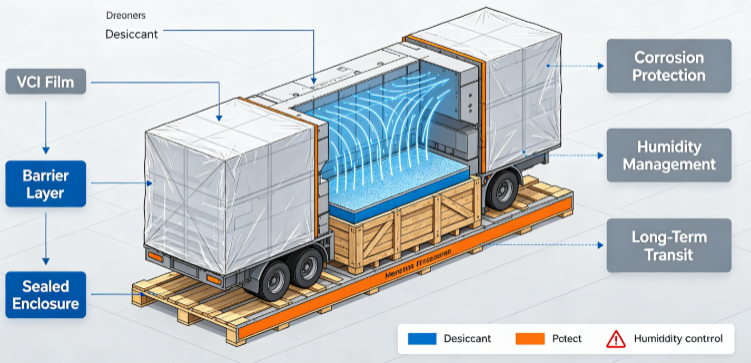
Inside a shipping container, temperature changes can create condensation. This phenomenon, sometimes called "container rain," may cause corrosion or surface damage if the equipment is not properly protected.
Therefore, export wooden packaging for machinery often combines:
· Wooden structural protection
· Vapor barrier film
· Desiccant systems
· Protective coatings
This approach creates a more controlled environment during transportation.
Industrial Wooden Skids
Wooden skids are widely used when complete enclosure is unnecessary.
Unlike closed crates, skids provide a strong supporting base while keeping the equipment accessible.
They are commonly used for:
· Large mechanical assemblies
· Heavy industrial components
· Steel structures
· Production modules
The main advantages include:
· Reduced packaging weight
· Easier loading and unloading
· Lower material consumption
· Improved handling efficiency
However, skid-based packaging requires accurate engineering because the entire equipment load is concentrated through the support structure.
For heavy applications, engineers usually calculate:
· Load distribution
· Beam strength
· Support spacing
· Forklift entry positions
Custom Wooden Packaging for Oversized Equipment
Some industrial equipment cannot fit into standard packaging dimensions.
Examples include:
· Large generators
· Industrial turbines
· Complete production lines
· Mining equipment
· Energy infrastructure components
For these applications, custom industrial wooden packaging is developed based on engineering drawings and transportation requirements.
The packaging may include:
· Modular crate structures
· Reinforced steel connections
· Removable panels
· Special lifting systems
· Custom internal supports
This type of packaging is common in project-based industries where each shipment is unique.
Material Selection for Industrial Wooden Packaging
The performance of industrial wooden packaging depends heavily on material selection.
Choosing the wrong material can lead to structural failure, moisture problems, or unnecessary transportation costs.
Professional manufacturers typically select materials based on:
· Equipment weight
· Required strength
· Environmental conditions
· Export destination
· Packaging lifespan
Common Materials Used in Industrial Wooden Packaging
Material | Main Characteristics | Typical Applications |
Solid hardwood | High strength and durability | Heavy machinery, oversized equipment |
Softwood lumber | Lightweight and cost-effective | General industrial crates |
Plywood panels | Stable structure and smooth surface | Export cases, equipment protection |
OSB panels | Economical and strong | Large industrial packaging |
Heat-treated timber | Export compliant | International shipments |
Solid Wood for Structural Components
Solid wood remains one of the most important materials for industrial packaging frames and support structures.
It provides:
· Strong load-bearing capability
· Good impact resistance
· Easy processing
For heavy equipment, structural components such as:
· Corner posts
· Base beams
· Support frames
are often manufactured from stronger timber grades.
Plywood for Export Packaging Panels
Plywood is commonly used for export wooden cases because of its dimensional stability.
Compared with natural wood panels, plywood is less likely to deform when exposed to environmental changes.
Its advantages include:
· Smooth surface
· Good strength-to-weight ratio
· Better resistance to cracking
· Suitable for enclosed packaging structures
Many international shipping cases combine solid wood frames with plywood panels to achieve both strength and efficiency.
Engineering Considerations for Heavy Equipment Packaging Design
Professional industrial wooden packaging manufacturers do not simply build crates based on product dimensions.
The packaging must be engineered around the real transportation environment.
Several technical factors must be evaluated.
Load Calculation and Weight Distribution
Heavy equipment creates significant pressure on packaging structures.
The manufacturer must understand:
· Total equipment weight
· Weight concentration points
· Contact areas
· Lifting forces
For example, a machine weighing 8 tons does not necessarily apply equal pressure across the entire base.
Some areas may carry much higher loads.
Without proper design, these concentrated forces can damage the crate structure or cause instability during handling.
Center of Gravity Analysis
The center of gravity is especially important for tall or irregular equipment.
Incorrect positioning can create risks during:
· Forklift movement
· Crane lifting
· Container loading
· Warehouse storage
Professional packaging designs often mark:
· Lifting points
· Balance points
· Handling instructions
This improves safety throughout the logistics process.
Shock and Vibration Protection
Industrial equipment may experience repeated vibration during transportation.
Road transportation creates continuous movement, while ocean shipping exposes cargo to vessel motion and container vibration.
To reduce risk, packaging may include:
· Anti-vibration pads
· Shock absorption materials
· Internal blocking systems
· Flexible support structures
For precision equipment, vibration control is often as important as physical protection.
Moisture and Corrosion Protection
Humidity is one of the biggest challenges in international equipment shipping.
A machine transported across oceans may experience:
· High humidity
· Temperature fluctuations
· Salt air exposure
· Condensation
Common protection methods include:
· Vacuum packaging
· Desiccant bags
· Rust preventive coatings
· Aluminum barrier film
For metal equipment, corrosion prevention should be considered during the packaging design stage, not after the equipment has already been packed.
Manufacturing Process of Industrial Wooden Packaging
A reliable industrial wooden packaging manufacturer follows a controlled production process to ensure every package meets transportation requirements.
The typical workflow includes several stages.
1. Project Evaluation and Packaging Design
The process begins with understanding the equipment.
Engineers review:
· Product drawings
· Dimensions
· Weight information
· Handling requirements
· Shipping route
For complex machinery, 3D models or CAD drawings may be used to develop accurate packaging structures.
2. Material Preparation
After design approval, suitable materials are selected.
The manufacturer prepares:
· Treated wood
· Structural beams
· Panels
· Fasteners
· Protective materials
For international shipments, all wood materials must comply with export regulations such as ISPM 15 requirements.
3. Precision Cutting and Assembly
Wood components are processed according to engineering specifications.
The assembly process may include:
· Cutting structural members
· Building base skids
· Installing reinforcement frames
· Adding internal supports
· Mounting panels
Experienced manufacturers focus on dimensional accuracy because even small errors can create problems during equipment loading.
4. Equipment Testing and Final Inspection
Before shipment, the packaging structure is inspected.
Quality checks typically include:
Inspection Item | Purpose |
Structural strength | Verify load capability |
Dimensions | Ensure equipment fit |
Wood treatment marks | Confirm export compliance |
Lifting points | Improve handling safety |
Internal protection | Prevent movement and damage |
For high-value industrial shipments, some companies also perform trial packing before final export.
Real Industry Application: Heavy Equipment Export Packaging for Manufacturing Projects
A practical example can be seen in the global shipment of industrial automation equipment.
A European manufacturing company exporting an automated production module to an overseas facility required packaging that could withstand:
· Long-distance ocean transport
· Multiple crane operations
· Humid port environments
· Final installation handling
The packaging solution included:
· Reinforced wooden crate structure
· Heavy-duty skid base
· Moisture barrier protection
· Internal equipment fixation
· ISPM 15 compliant timber
The result was a safer transportation process with reduced risk of damage during international delivery.
This type of project demonstrates an important point: industrial packaging is not only a protective layer. It is part of the equipment delivery strategy.
For manufacturers shipping valuable machinery, the packaging design should be considered during the early project planning stage, not as a last-minute logistics task.
Industrial Applications of Custom Wooden Packaging for Heavy Equipment
Industrial wooden packaging is used across many industries where equipment value, transportation distance, and handling complexity require more than standard shipping protection.
For heavy machinery manufacturers, the packaging system is not an afterthought. It is part of the product delivery process.
A properly engineered wooden crate or export packing solution protects equipment from:
· Mechanical impact during loading and unloading
· Vibration during road, rail, or sea transportation
· Moisture and corrosion risks
· Improper handling at ports and warehouses
· Long-term storage conditions
Different industries have different packaging requirements. A precision CNC machine, for example, requires a very different approach compared with a large mining component or construction machine.
Heavy Machinery and Industrial Equipment Shipping
Heavy machinery manufacturers frequently rely on industrial wooden packaging because their products are large, heavy, and often shipped internationally.
Typical applications include:
· CNC machining centers
· Injection molding machines
· Metal processing equipment
· Industrial robots
· Hydraulic systems
· Production line components
For these products, the packaging design usually includes:
· Reinforced wooden crates
· Heavy-duty base skids
· Internal blocking and bracing
· Moisture barrier protection
· Shock-resistant fixation systems
A common mistake in industrial shipping is focusing only on the external crate strength.
The real challenge is controlling movement inside the package.
Even a strong wooden box can fail if the equipment is allowed to shift during transportation.
Energy, Mining, and Construction Equipment Packaging
Large components used in energy, mining, and construction projects often require customized export packaging because of their size and weight.
Examples include:
· Generator components
· Pump systems
· Mining equipment parts
· Engine assemblies
· Construction machinery attachments
For these applications, engineers usually consider:
· Static load capacity
· Dynamic transportation forces
· Lifting requirements
· Container loading limitations
· Weather exposure
In many cases, the packaging design process begins with reviewing engineering drawings rather than simply measuring the finished product.
This approach helps manufacturers create packaging that is strong enough without adding unnecessary weight and shipping cost.
Automotive and Aerospace Component Packaging
Automotive and aerospace industries often require a higher level of packaging precision because many components have strict dimensional and surface protection requirements.
Industrial wooden packaging solutions for these sectors may include:
· Custom-fit wooden cases
· Internal foam protection
· Anti-static protection
· Corrosion prevention methods
· Vacuum-sealed barrier materials
For aerospace components, packaging performance is especially important because parts may travel through multiple transportation stages before reaching the final assembly location.
A small packaging failure can create delays that are far more expensive than the packaging itself.
Buyer Selection Guide: How to Choose the Right Industrial Wooden Packaging Manufacturer
Selecting an industrial packaging supplier is not only about finding someone who can build a wooden crate.
For international buyers, the right partner should understand engineering requirements, export regulations, and real transportation conditions.
Before choosing a supplier, purchasing teams and engineers should evaluate several important factors.
1. Engineering Capability and Custom Design Experience
Industrial packaging is usually project-based.
A professional manufacturer should be able to work with:
· Product drawings
· Equipment dimensions
· Weight information
· Center of gravity data
· Transportation methods
· Loading requirements
The supplier should understand that every shipment has different risks.
A 500 kg machine and a 20-ton industrial component cannot be packaged using the same design logic.
Look for manufacturers that provide:
· Structural design support
· Packaging drawings
· Prototype development
· Load calculation experience
2. Material Quality and Wood Selection
The performance of wooden packaging depends heavily on material quality.
Common materials include:
Material | Main Characteristics | Typical Application |
Solid wood lumber | High strength and durability | Heavy equipment crates |
Plywood | Stable structure and smooth surface | Export cases and panels |
Hardwood reinforcement | Higher impact resistance | Heavy-duty industrial packaging |
Engineered wood panels | Lightweight and consistent | Medium-duty applications |
For international shipments, buyers should also confirm whether the material complies with destination requirements.
Wood packaging material used in international trade is commonly required to comply with ISPM 15, which regulates treatment and marking requirements to reduce the spread of wood pests.
3. Export Compliance and Documentation
International shipping creates additional requirements.
A qualified industrial wooden packaging supplier should understand:
· ISPM 15 treatment
· IPPC marking requirements
· Export documentation
· Destination country regulations
Non-compliant wooden packaging can cause customs delays, additional inspection costs, or shipment disruption.
Many countries require solid wood packaging materials such as crates, pallets, and dunnage to meet ISPM 15 requirements before entering their markets.
4. Protection Design Beyond the Wooden Structure
A wooden crate alone does not always provide complete protection.
Professional export packaging often combines multiple protection methods.
Protection Method | Purpose |
Vapor barrier film | Prevent moisture exposure |
Desiccant materials | Control humidity inside packaging |
VCI protection | Reduce corrosion risk |
Shock indicators | Monitor transportation impact |
Internal bracing | Prevent movement |
Foam cushioning | Protect sensitive components |
For ocean transportation, especially long-distance shipping, moisture protection becomes a critical consideration because temperature changes inside containers can create condensation risks.
Real Industry Case Study: Industrial Wooden Packaging for Wind Turbine Components
A practical example can be found in the renewable energy supply chain.
Wind turbine manufacturers and suppliers frequently transport large components across countries and continents. Components such as gearbox parts, generators, and control systems often require customized wooden packaging because they cannot be shipped using standard pallets.
A typical solution includes:
· Heavy-duty wooden crates
· Reinforced skid bases
· Moisture protection systems
· Custom lifting points
· Export-compliant treatment
The packaging must withstand:
· Factory handling
· Truck transportation
· Port operations
· Sea freight vibration
· Long storage periods
This type of project demonstrates an important point:
Industrial wooden packaging is not simply a container around a product.
It is an engineered protection system designed around the complete logistics process.
Frequently Asked Questions About Industrial Wooden Packaging
What is industrial wooden packaging used for?
Industrial wooden packaging is mainly used for protecting heavy equipment, machinery, and valuable industrial components during transportation and storage.
Common applications include:
· Manufacturing equipment
· Automation systems
· Energy components
· Construction machinery
· Industrial spare parts
It provides structural protection, handling support, and export suitability.
What is the difference between standard wooden crates and industrial wooden packaging?
Standard wooden crates are usually designed for general transportation.
Industrial wooden packaging is engineered for specific products and transportation conditions.
The difference usually includes:
· Higher load capacity
· Reinforced structures
· Custom internal supports
· Moisture protection
· Export compliance
For heavy equipment shipping, customized design is often necessary because product weight and transportation risks vary significantly.
Does industrial wooden packaging need ISPM 15 certification?
For many international shipments, yes.
ISPM 15 applies to regulated wood packaging materials used in international trade, including many wooden crates, pallets, and dunnage made from solid wood.
The standard requires approved treatment and proper marking to reduce the risk of spreading wood pests between countries.
However, specific requirements depend on the destination country and packaging material type.
How is heavy equipment secured inside a wooden crate?
Heavy equipment is usually secured through a combination of:
· Base mounting
· Blocking
· Bracing
· Bolting
· Internal supports
· Cushioning materials
The goal is to prevent movement during transportation while avoiding unnecessary stress on sensitive components.
Can industrial wooden packaging be customized for overseas shipping?
Yes.
Professional manufacturers can design packaging according to:
· Product size
· Equipment weight
· Shipping route
· Container requirements
· Handling method
· Destination regulations
This is especially important for international export projects.
How long does custom wooden packaging production take?
Production time depends on:
· Packaging complexity
· Material availability
· Quantity requirements
· Engineering approval process
Simple wooden crates may require only several days, while complex industrial packaging projects may require additional design and testing time.
Final Thoughts: Choosing the Right Industrial Wooden Packaging Partner
For heavy equipment manufacturers, exporters, and industrial suppliers, packaging quality directly affects transportation reliability.
The purpose of industrial wooden packaging is not only to cover a product during shipment.
It is to create a controlled protection environment that allows valuable equipment to arrive safely, efficiently, and without unnecessary risk.
A reliable packaging partner should provide:
· Engineering-based packaging design
· High-quality wood materials
· Export compliance knowledge
· Customized manufacturing capability
· Consistent production quality
As global supply chains become more complex, companies increasingly need packaging solutions that are designed around real transportation challenges.
Whether shipping industrial machinery, energy components, automation equipment, or large-scale manufacturing systems, properly engineered wooden packaging helps reduce damage risk and improve logistics efficiency.
The right packaging manufacturer does more than build crates.
They help protect the value of every shipment from factory floor to final destination.
Ready to Transform Your Packaging?
联系我们获取定制报价,我们的专业团队将为您设计最佳的包装解决方案